
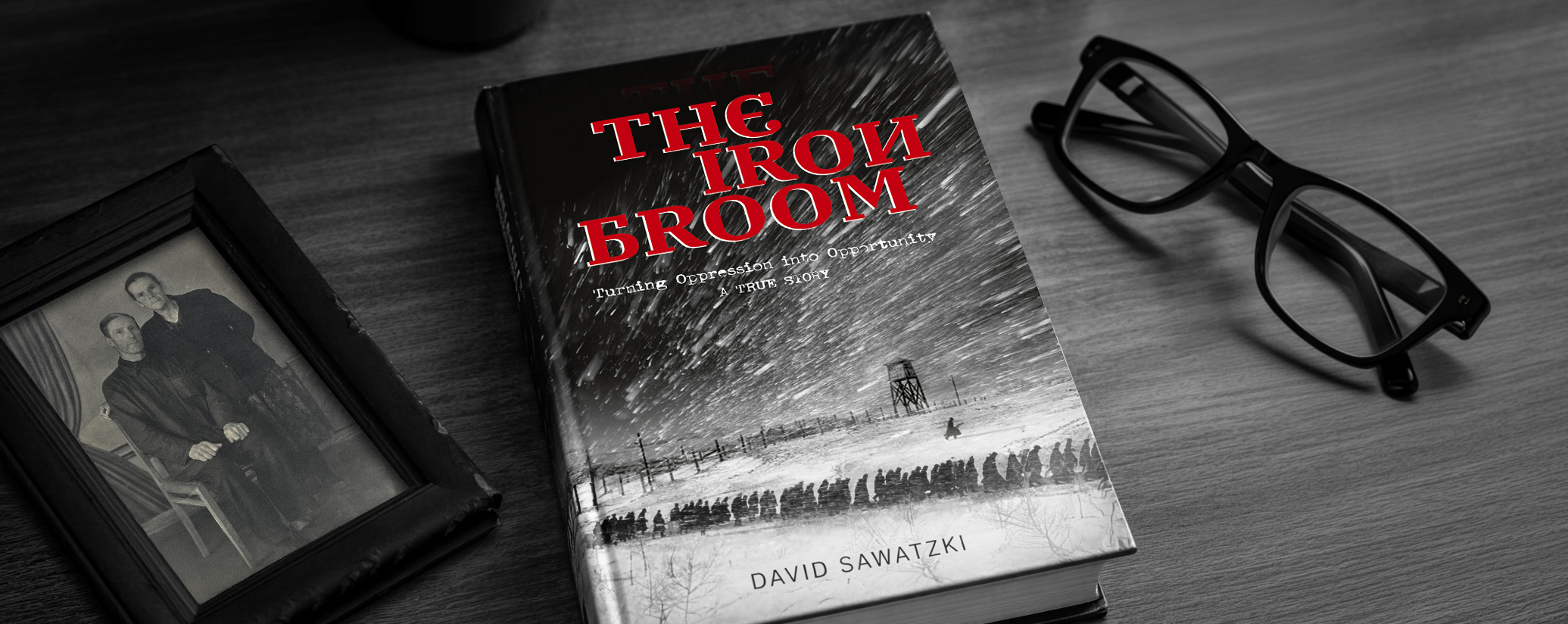
Turning Oppression into Opportunity
A deeply personal story of identity, faith, and human dignity that outlasted an empire.
“
“My husband was reading it until 4am. It was a page-turner, he couldn’t put it down! He put it on par with The Hiding Place.”
– Annette E.
Branded an enemy. Swept to Siberia. Shaped by adversity.
The Iron Broom is the gripping true story of David, raised between two worlds:
the warmth of his family home and the domination of Soviet communism.
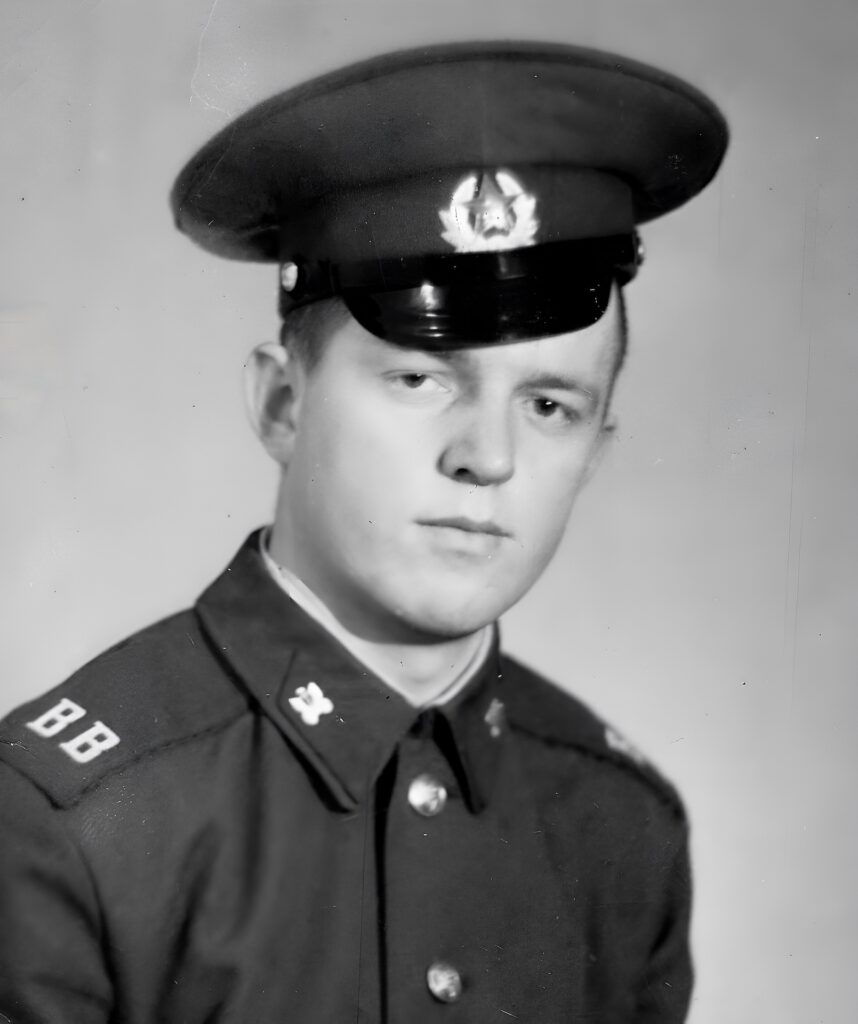
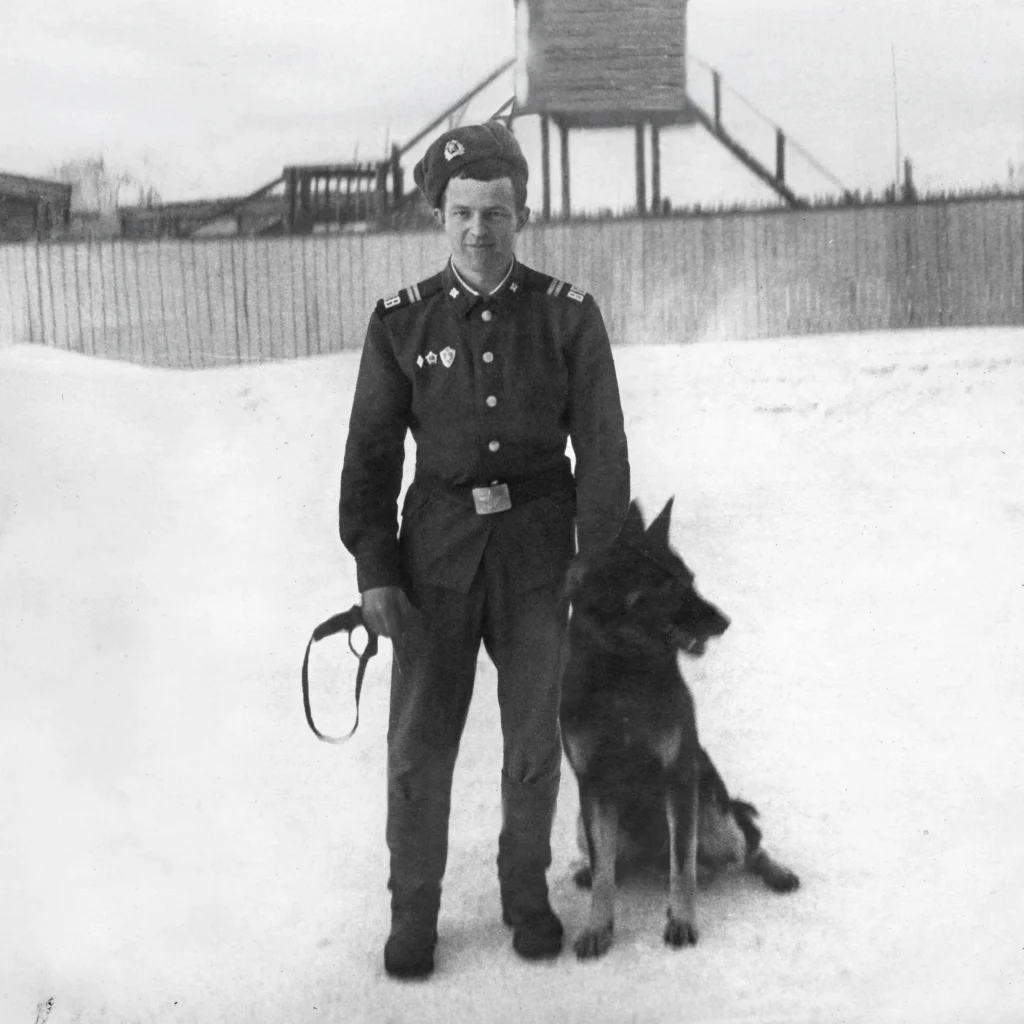
When he chose personal conviction over conformity, the Soviet military sentenced him to a prison camp deep in the Siberian taiga, one of the empire’s harshest outposts. There, guarding the broken and forgotten, David came face to face with a system designed to extinguish individual identity and crush the soul.
But the punishment designed to break him became the one that shaped him.
“
“I laughed and cried as I experienced the world through Tina and David’s eyes. This book is a hidden gem,” one of the most inspiring true stories of courage and beauty born out of intense hardship.
– Melanie M.
Why is It Called “The Iron Broom?”
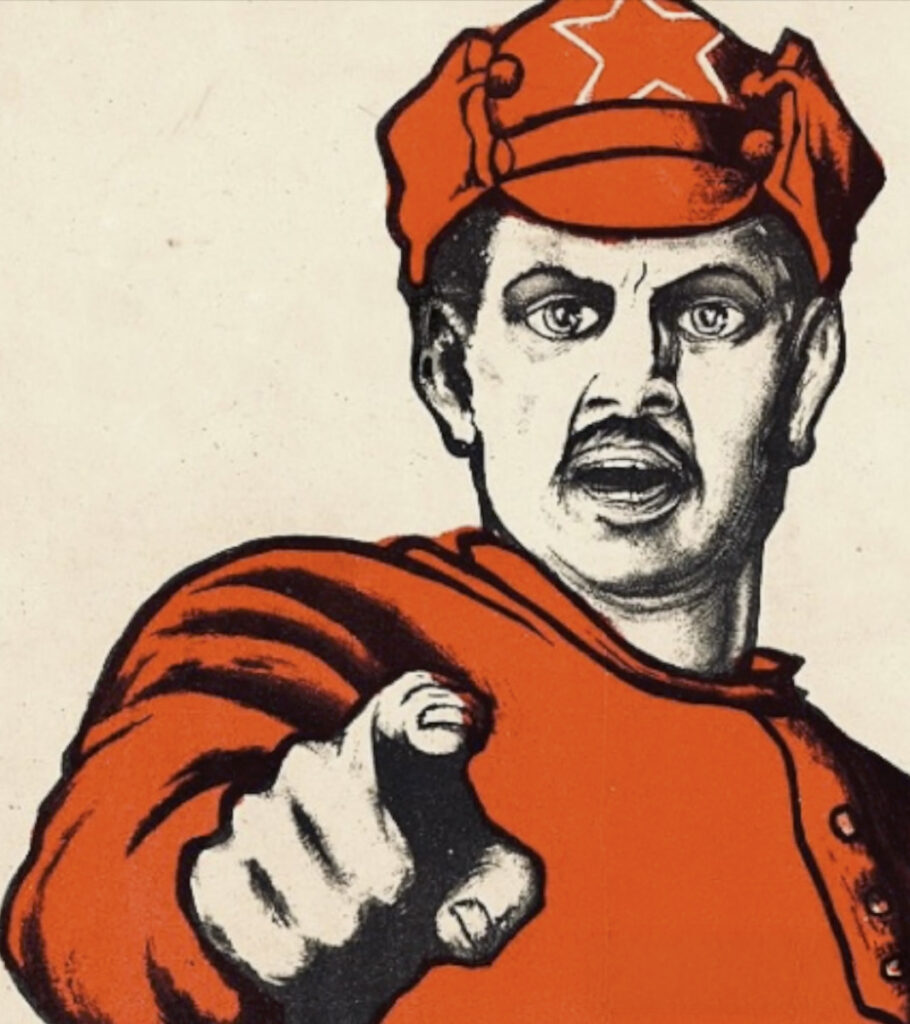
The phrase “iron broom” was used by the Soviet secret police to describe their mission: purging society of “undesirables.” This included political opponents, religious people, and anyone seen as disloyal to the regime. It symbolized the forceful, uncompromising sweep of “human trash” into labor camps, the Gulag.
The Iron Broom tells the story of ordinary people enduring extraordinary hardship. It raises a timeless question: What does it cost to stay true to your convictions when everything in and around you demands compromise?
“
“I could hardly put it down. It challenged me, brought tears to my eyes, and blessed my heart.”
– Nancy W.
Who Is The Iron Broom Written For?
Though set in the Soviet era, the questions at the heart of this story are deeply relevant to us today:
- What does it cost to stay true to our convictions?
- How do we find light in the darkest seasons of life?
- Can I still find the voice of conscience in today’s noise?
This story may resonate with you or someone you know if you:
- Are searching for values that hold up under pressure
- Recognize that hardship can shape and refine character
- Want to pass on a legacy of integrity and resilience
- Have wrestled with suffering, loss, or disillusionment
- Enjoy a gripping, true story
“
“A phenomenal book that is so applicable to today!”
– Caleb M.
Inside the World of The Iron Broom
Sometimes we search for freedom only to find shackles instead.
While Europeans sailed west to America in search of liberty, David’s German ancestors drove their wagons east, settling Russia’s wild frontier for the same reason. They couldn’t have known they were leading their families into unimaginable hardship or that the regime would sweep so many of them away.
Through famine, revolution, and repression, they clung to their faith and convictions. Power and fear divided the nation into hunters and prey, executioners and victims, all captives of the same system.
Through famine, revolution, and repression, they clung to their faith and convictions. Power and fear divided the nation into hunters and prey, executioners and victims, all captives of the same system.
This is the world David grew up in.
The Iron Broom was written to preserve the memory of those who endured these realities and to explore the difficult questions of compromise, conviction, and suffering that we still deal with today.
In the face of extreme adversity, David and his family determined not to lose their humanity within a system trying to erase it.
In the end, the conflict is not won or lost by political systems and nations. It is fought within the human soul, no matter the setting.
The Iron Broom was written to preserve the memory of those who endured these realities and to explore the difficult questions of compromise, conviction, and suffering that we still deal with today.
In the face of extreme adversity, David and his family determined not to lose their humanity within a system trying to erase it.
In the end, the conflict is not won or lost by political systems and nations. It is fought within the human soul, no matter the setting.
“
“Wow what a story! I’ve read a number of books from those who lived under communism, but this story gives the best snap shot of life under Soviet rule that I’ve read, touching three generations …”
– Douglas A.
Readers’ Reflections
After reading The Iron Broom, readers often walk away with:
- Unique insight into life behind the Iron Curtain
- Greater understanding of human resilience under suffering
- Gratitude for freedoms by contrast
- Appreciation for the power of family and role models
- Consideration of personal convictions
“
“In most passages of the book, I saw myself as an invisible part of the story. What struck me was the impressive, respectful way he managed to put to paper some of the very painful, tragic experiences of his family, even his own.”
– Heinrich F.
Meet the Author
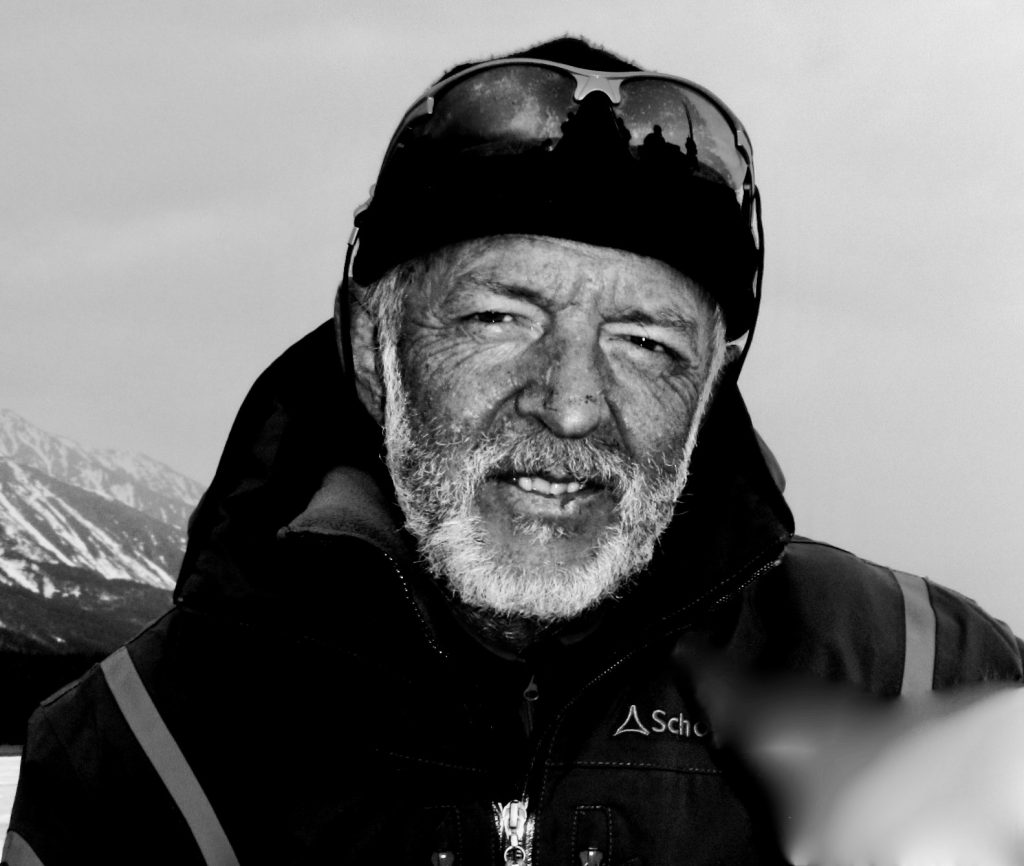
After escaping the Soviet Union, David discovered the freedom to think, dream and explore, a journey that took him to Germany, England, Africa, Canada, and the United States.
Following the collapse of the Soviet Union, he returned to Siberia with his own family, where they spent two decades bringing practical support and mentorship to generations shaped by Soviet rule. With an international team and faith-based outreach, David helped individuals and communities rebuild a sense of God-given dignity, identity, and purpose.
David continues investing in men and communities worldwide through Men’s Forge, an international character-development movement focused on developing body, soul, and spirit.
Following the collapse of the Soviet Union, he returned to Siberia with his own family, where they spent two decades bringing practical support and mentorship to generations shaped by Soviet rule. With an international team and faith-based outreach, David helped individuals and communities rebuild a sense of God-given dignity, identity, and purpose.
David continues investing in men and communities worldwide through Men’s Forge, an international character-development movement focused on developing body, soul, and spirit.
“
“This is not just “a book,” this is a thoughtful experience.”
– Patti H.
FAQ's
Is The Iron Broom a political book?
No, it is not. Readers may recognize similarities or contrasts and will come to their own conclusions.
Do I need to know Soviet history to understand this book?
Not at all. The Iron Broom is written for everyday readers and includes notes on many important cultural and historical references.
How can I relate to this story if I didn’t grow up in that world?
Even though it takes place in a different time and setting, many readers resonate deeply with the universal human questions at the heart of the story: identity, hardship, conviction, family, and perseverance.
Is it appropriate for younger readers?
Readers in tenth grade and up (both public schooled and homeschooled) can benefit from exposure to themes raised in the book. Discussing or journaling mediates the emotional impact and invites them to explore their own thoughts and values. For example, they can discuss and reflect on the question, “How do individual choices shape not only personal outcomes but also families and communities over generations?”
Is it available as an eBook or audio-book?
It’s currently available in softback, hardback, and eBook versions at the link below. An audio version is coming.
“
“It is not possible to read this book without tears. I hope that a lot of people, especially young people, will read it.”
– Boris G.
Read The Iron Broom
What does it take to stay human when the world turns brutal?
David’s story reminds us that hardship is not proof that life went wrong. Adversity is part of the human experience. Watching ordinary people face it with courage, dignity, and conviction instead of avoidance and despair shows that hardship doesn’t define us. Our response to it does.
Through the eyes of both those imprisoned and the guards, this narrative acknowledges the pain of suffering without reducing people to being victims of it. The circumstances may differ, but the deeper human hunger for stability is the same.
David’s story reminds us that hardship is not proof that life went wrong. Adversity is part of the human experience. Watching ordinary people face it with courage, dignity, and conviction instead of avoidance and despair shows that hardship doesn’t define us. Our response to it does.
Through the eyes of both those imprisoned and the guards, this narrative acknowledges the pain of suffering without reducing people to being victims of it. The circumstances may differ, but the deeper human hunger for stability is the same.
Connect with the Author
If you’re interested in speaking events, interviews, or book discussions, David would be glad to hear from you. Reflections on the book are always welcome, too.